Most, if not all, Iranian black metal projects are bedroom projects. From the glory days of the 2000s to today, the approach has remained the same. A PC, a guitar, a bass if they had some spare money, some bootleg recording software with a drum machine plug-in, and a crappy mic. Why? There simply was no other realistic way to do it. But that doesn’t matter. Limitations, or rather oppression, have forced Iranian artists to grow their talent in ways different from the norm.
Assuming you’ve listened to one or two Iranian black metal albums since you’re reading this, you’ve probably noticed the undeniable layer of ambient and synth running underneath many of these projects. Don’t quote me on this, but as a non-musician, I’ve always assumed that’s because we like our music with a bit more emotion, combined with the lack of access to proper tools and the means for a conventional songwriting and recording process. I bring this up because I want to highlight the talent we have within our borders. Had these limitations not existed, you would probably be hearing a very different sound coming out of the Iranian black metal scene.

Last week I learned that Beshenitar has just released its new and final album, Flames of Eternal Blasphemy. If you’re an active member of the online black metal community, you probably know the sole man behind this northern Iran based project, Keyvan. With that said, I think now is a good time to take a thorough look at his musical career as a whole.
I’d describe Beshenitar as a lo-fi, riff driven, raw, and sometimes depressive atmospheric project. Thematically, the project has long revolved around misanthropy, rebellion, death, and solitude, but the latest record, which I’ll get into later, leans much more heavily into anti religion and rebellion for obvious reasons.
My first connection with the project was actually its second album, The Great Wound of History from 2018, and a four-minute song called Under the Solitude Flag. Its rather low tempo, repetitive yet melancholic guitar work, beautifully executed vocals, and ambient passages immediately drew me in. When I think of Beshenitar, Keyvan screaming “There no hope” during the chorus of this song is still the first thing that comes to mind. That said, you might have heard the title track, The Great Wound of History, mentioned in other reviews as one of the project’s stronger technical performances.
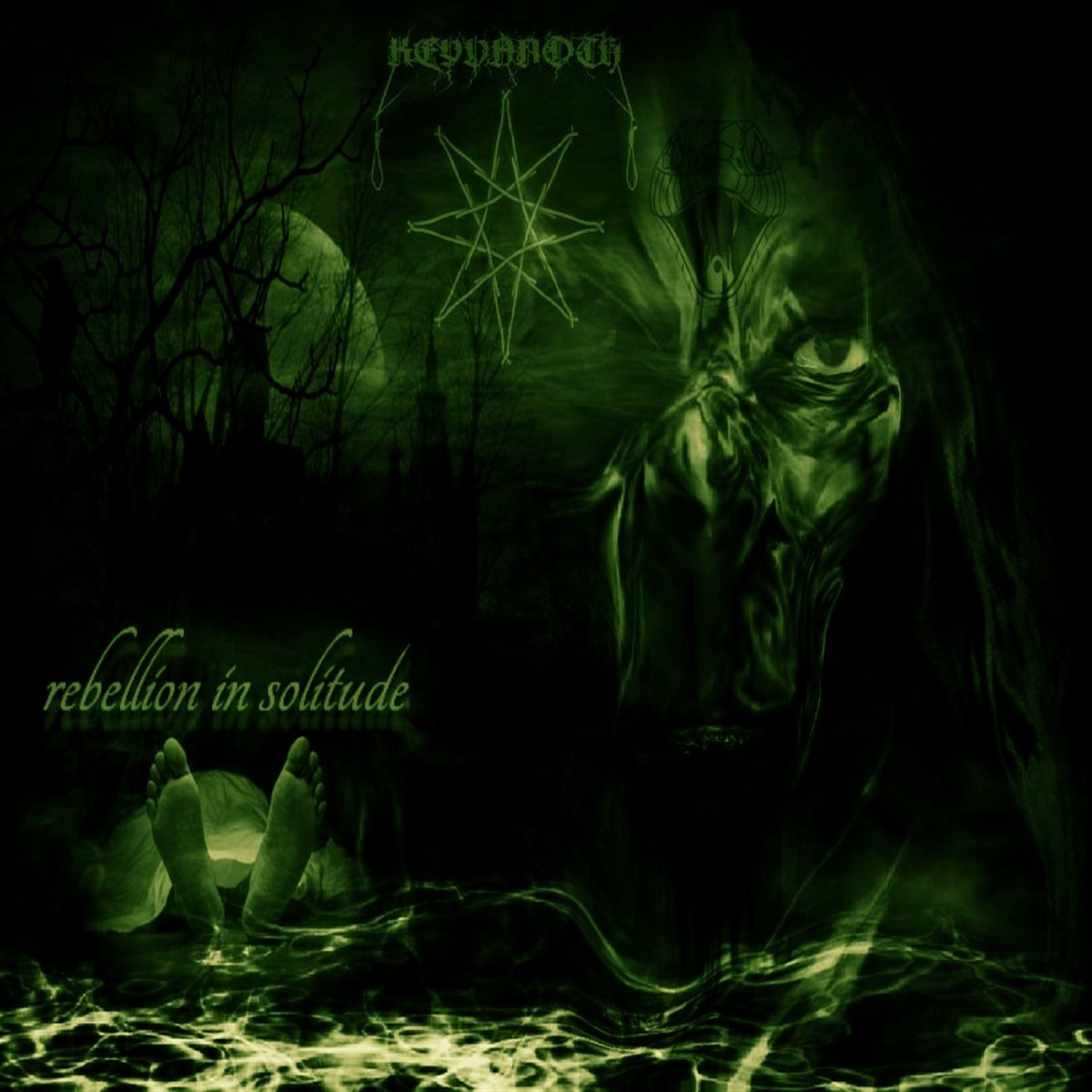
Besides my introduction album, there’s the debut, Rebellion in Solitude, released in 2017, followed by a couple of demos. Then came Around the 13 Sins in 2021, where we hear a shift in Keyvan’s songwriting. Most of the songs move at a higher tempo with a rawer edge, distancing themselves from the ambient atmosphere of the previous records. You can also catch a glimpse of a lyrical shift toward anti-regime and anti-religion.
Not that Beshenitar’s sound changed dramatically over the years. He definitely followed a blueprint throughout his musical journey. But with the 2024 release, Unsocialized, I sensed a step back from outward anger and a turn toward something more personal. It’s not as aggressive as the previous compositions. The melancholic melodies return while maintaining the familiar lo fi atmosphere, and overall, the album sounds cleaner.
There’s been a lot going on in Iran between the last two releases. The country has been dealing with the aftermath of Zan, Zendegi, Azadi movement, an economic crisis, social oppression, and mass executions ranging from political activists to ordinary civilian protesters, and then came the Lion and Sun Revolution in January this year, when tens of thousands of Iranians were killed in the regime’s crackdown. As a natural reflection of those circumstances, I wouldn’t have expected anything else from an artist like Keyvan. Beshenitar unleashed its final release in late June this year; according to Keyvan, he began recording it around the time of the Twelve Day War between Iran and Israel and continued through the ongoing conflict involving the United States, Israel, and Iran. Given all of that, you’d rightfully expect a wild record. He delivered.
Flames of Eternal Blasphemy is brutal. A word I never used when describing Beshenitar’s earlier work.
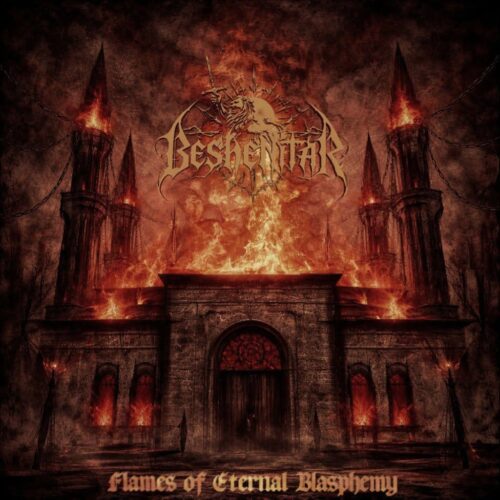
The album opens with Faith Humiliated. Right from the start we’re hit with blast beats and punchy riffs, followed by a touch of shredding before the vocals come straight for your face. Later in the song, he hints at death metal style rhythms before closing it out, and we hear similar moments throughout the album. One thing I’ve always appreciated about Keyvan is that he has never been afraid to express himself unapologetically. The world is chaotic, so he brings chaos.
A pregnant angel drags god to death
Doubt cuts deep with frozen breath
Her spirit torn by the unbeliever’s cry
Born not of hope, nor of dreams that fly
The Pregnant Angel of God and Disgust for the Human Form are very anthem like songs. One might say Beshenitar has always been heavily influenced by second wave black metal, Burzum in particular, at least up until this album. On this record, however, you can also hear traces of Emperor or [early] Dimmu Borgir as he leans more into symphonic and orchestral textures, as well as Swedish black metal. A Bloody Supper with Satan sounds exactly like its name suggests. Upbeat, punchy, and straightforward chaos.
 Although I can sometimes hear hints of Emerna (Avinar) and Aras in his songwriting, unlike many other Iranian projects, Beshenitar never really tried to integrate Persian musical elements into his work. It’s always been textbook BM, played by his own standards. Beshenitar got riffs. But on Flames of Eternal Blasphemy, I hear a distant Persian feeling woven into some of them. It could be completely unconscious, because I hear a salute to the mighty Beherit as well.
Did I mention the riffs? He throws out a few particularly memorable ones on The Aquatic Ancestry of Man and Where You Are Not. Then he slows things down a notch with The Bastard Human before picking up the pace again on The Slow Fall of Childhood.
Symbols of man rise from the dust
Anxiety and torment in them I trust
War and violence repeat their call
A creation hollow, a lie for all
The album closes with the deeply personal Nothingness Prevails, which I take as a salute to Beshenitar’s earlier works. A beautiful ambient passage in the middle gives way to one final, prolonged scream. It feels like the end of Beshenitar’s journey.
Nothingness prevails
To forget our pains
To destroy our filthy world
Again and again
Nothingness prevails
Let me scream from within
Let it destroy me from beginning to end
Beshenitar “Flames of Eternal Blasphemy” 2026
available on CD and tape via Depressive Illusions Records
Order here
Bandcamp | Instagram | Spotify
